

Larynx & Voice Disorders Treatment
Larynx & Voice Disorders Treatment in Dhaka
A hoarse, weak or changed voice that does not settle deserves a proper look. The ENT team at Malleus ENT Specialized Hospital in Shantinagar examines your voice box, looks for the cause and explains your options in plain language.

Understanding the larynx and your voice
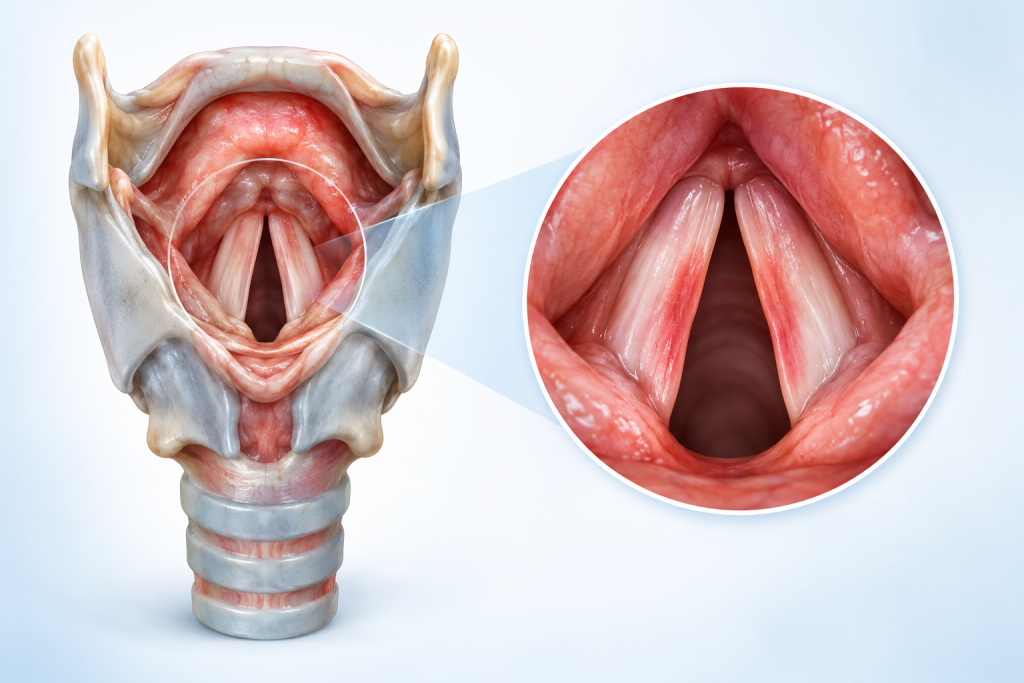
The larynx, or voice box, sits at the top of your windpipe. Inside it, two vocal cords open to let you breathe and close and vibrate to make sound. Because they work so hard, small changes in the vocal cords can quickly change how you sound.
Most voice changes come from short-lived problems such as a cold or a day of shouting. But a voice problem that lasts can also point to a vocal cord growth, a nerve problem or, less often, a serious condition. Only an examination of the voice box can tell these apart.
That is why ENT guidelines recommend that a hoarse voice that has not improved within four weeks should have the larynx examined, and sooner if a serious cause is suspected.
The voice box helps you to
Speak, sing and call out
Breathe, by keeping the airway open
Swallow safely, by protecting the windpipe from food and liquid
Larynx and voice problems we evaluate
Select a condition to learn what it means and when to see an ENT specialist.
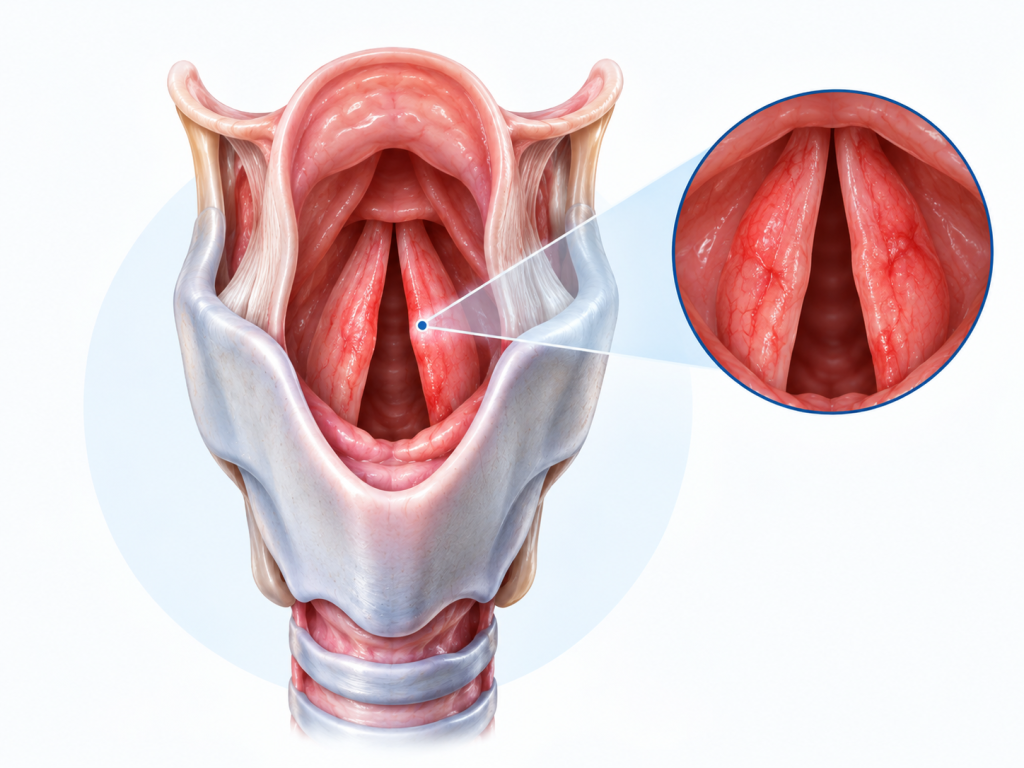
Voice Changes
A change in pitch, volume or quality of your voice. Many are brief, but a change that stays should be examined.
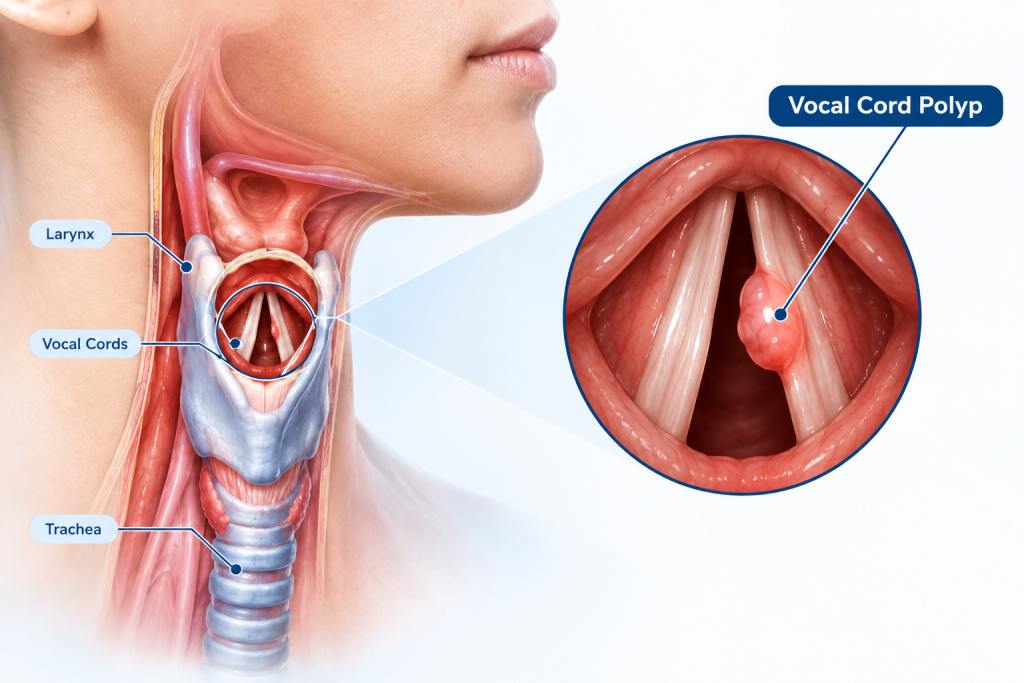
Vocal Cord Polyp
A usually non-cancerous growth on a vocal cord, often linked to voice strain. It can cause a rough, breathy or weak voice.
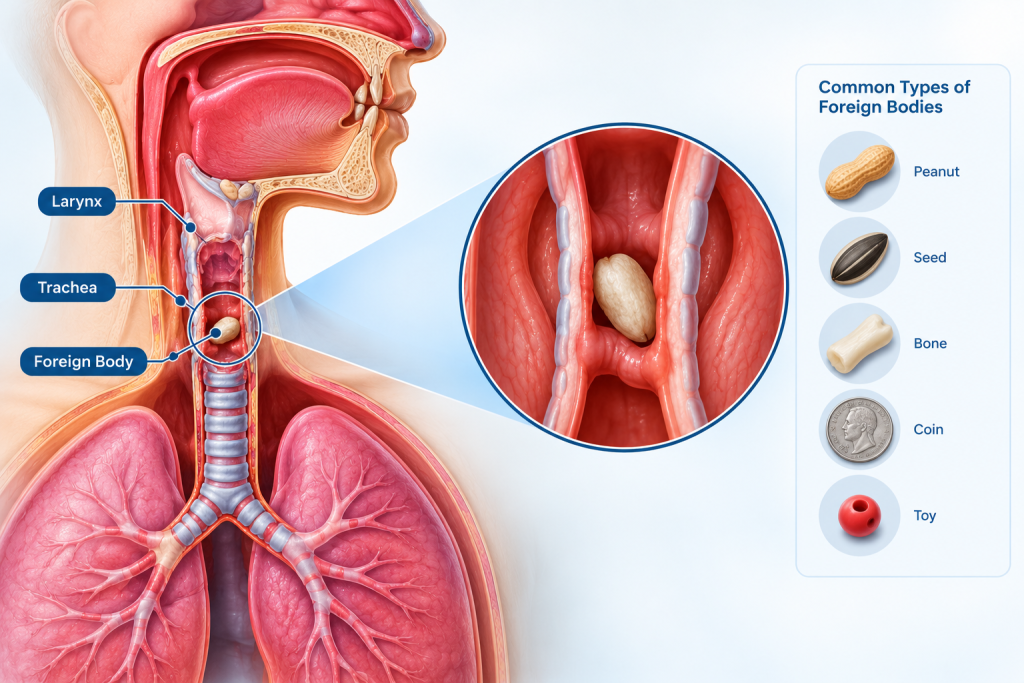
Foreign Body in Airway
Sudden choking, coughing or noisy breathing after food or a small object may mean it is stuck. This is an emergency: go to the nearest emergency department.
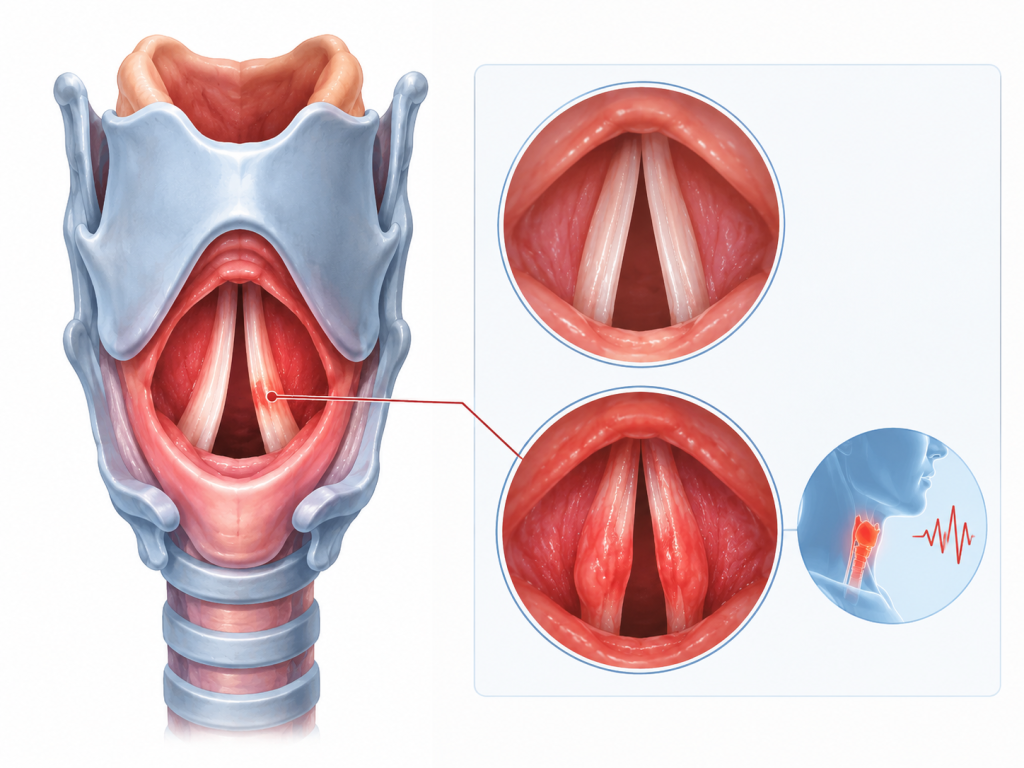
Hoarseness of Voice
A rough, strained or breathy voice. Laryngitis and voice strain are common causes, but hoarseness lasting over four weeks needs the voice box examined.
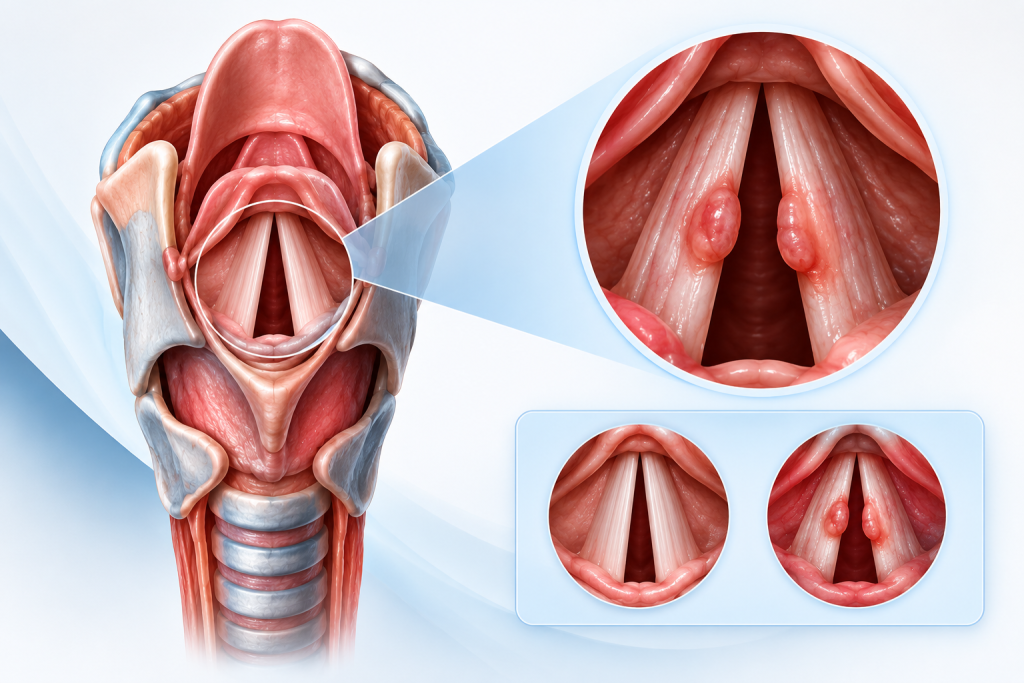
Recurrent Hoarseness
Hoarseness that keeps coming back points to a cause that has not been found, such as voice strain, reflux or a vocal cord change.
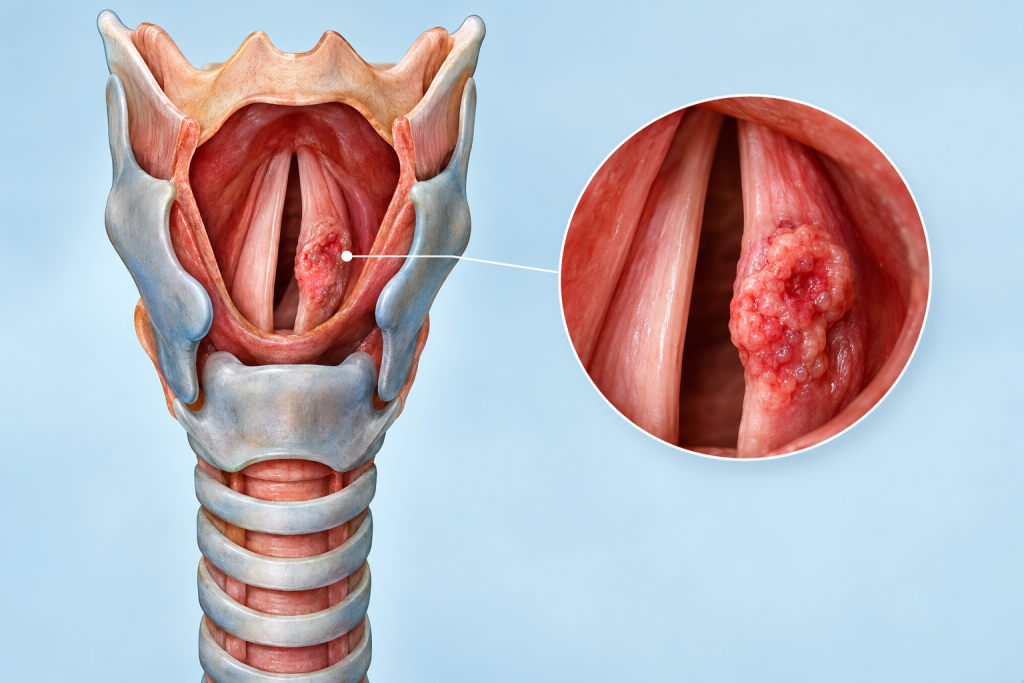
Laryngeal Cancer
Cancer of the voice box. Hoarseness that lasts can be an early sign, especially in smokers, so early examination matters.
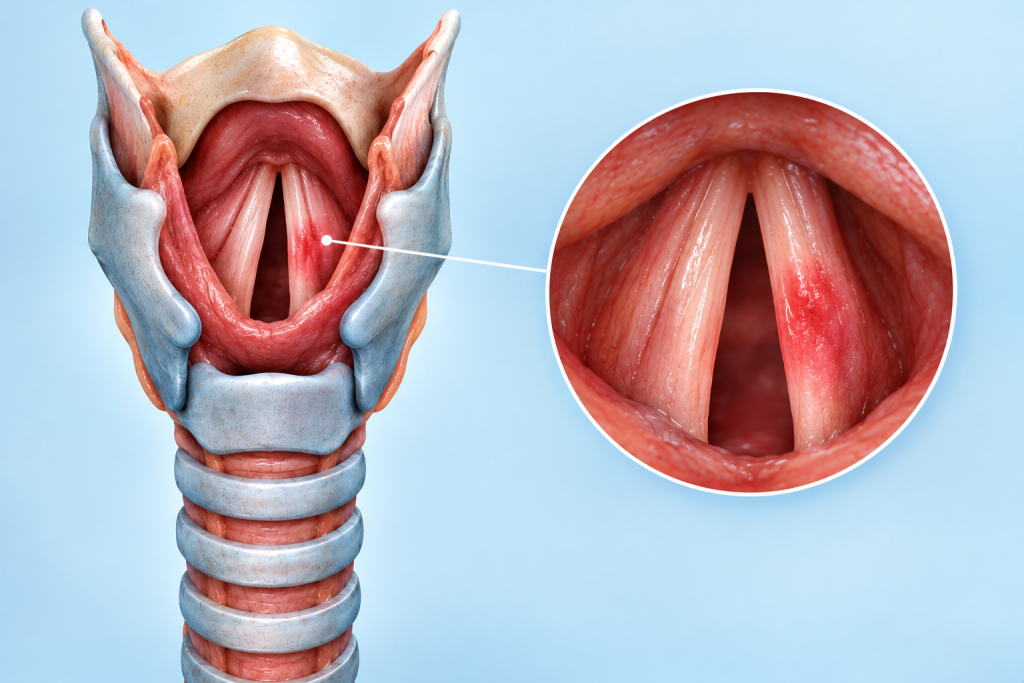
Difficulty Speaking
Speech that feels effortful, strained or unclear can come from the voice box, muscle tension or the nerves. Sudden difficulty with weakness or a drooping face is an emergency.
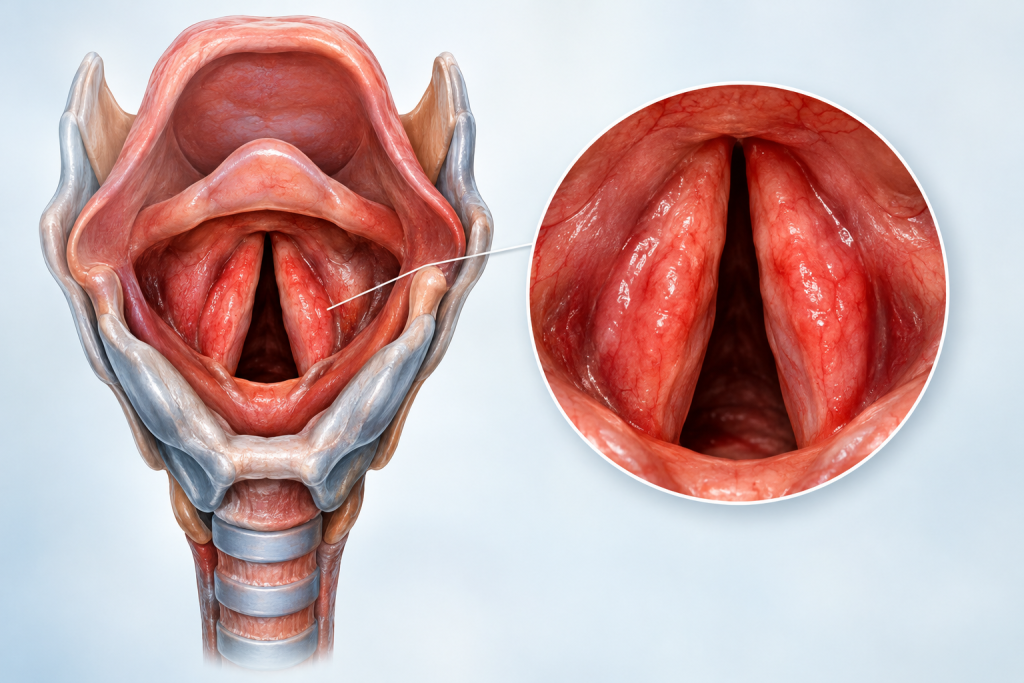
Laryngitis
Inflammation of the voice box from infection, irritants or voice strain. Most short episodes ease with voice rest, but lasting symptoms need review.
Loss of Voice
Being unable to make sound, or only a whisper. Common after laryngitis, but sudden loss with breathing trouble needs urgent care.
In a study of 130 patients with hoarseness at a Dhaka hospital, chronic laryngitis was the most common cause, followed by vocal cord nodules and polyps; a smaller number had laryngeal cancer. This is why a lasting change should never be assumed to be harmless.
Common symptoms and warning signs
Many voice problems start with small changes. Knowing which signs are more serious helps you act at the right time.
Common symptoms
These can occur in many larynx and voice conditions.
A rough, raspy, breathy or strained voice
A voice that is weaker, higher or lower than usual
Voice that breaks or tires quickly when talking
A scratchy, dry or tickling throat
Needing to clear the throat often
Loss of voice or speaking in a whisper
Warning signs to act on
See an ENT specialist soon if you notice any of these. Go to emergency care for the first two.
Trouble breathing, or noisy, high-pitched breathing
Choking, or a feeling that something is stuck in the airway
Hoarseness lasting more than four weeks
Pain or difficulty when swallowing
A lump in the neck, or blood in saliva or phlegm
One-sided throat or ear pain that does not go away
Voice change after neck surgery or a breathing tube
Possible causes of voice problems
The cause decides the treatment, which is why examination comes before any plan.
Infection and inflammation
Viral laryngitis after a cold or flu is the most familiar cause of a lost or rough voice.
Voice strain
Shouting, long hours of talking or singing, especially while unwell, can injure the vocal cords.
Vocal cord growths
Nodules, polyps and cysts change how the cords close and vibrate.
Acid reflux
Stomach acid reaching the throat can irritate the voice box in some people.
Smoking and irritants
Tobacco, smoke and polluted air irritate the lining of the larynx.
Nerve and muscle problems
Vocal cord paralysis or muscle tension can weaken or strain the voice.
Tumours, including cancer
Growths in the larynx can cause lasting hoarseness and need prompt assessment.
Other health conditions
An underactive thyroid, neck surgery or breathing-tube injury can also affect the voice.
How voice problems are diagnosed
The aim is to see the vocal cords, not to guess from the sound of your voice.
Consultation
We listen to your symptoms, how long they have lasted, your work, smoking habits and past health.
ENT examination
A careful check of your mouth, throat and neck, and how your voice sounds.
Fibre optic laryngoscopy
A thin flexible scope lets the specialist view the voice box and watch the vocal cords move.
Further tests if needed
Imaging, pathology or a tissue sample only when your specialist thinks they are clinically necessary.
Seeing the vocal cords first also matters before voice therapy or medicines are chosen, so the treatment fits the actual cause.
When to consult an ENT specialist
Book an appointment if you have
Hoarseness or a changed voice for more than four weeks
Hoarseness that keeps returning
A hoarse voice and you smoke or use tobacco
Voice loss that is not improving after a few days of rest
Pain or trouble swallowing along with voice change
A lump in the neck, or coughing up blood
A voice that affects your work, teaching or daily life
Trouble breathing or noisy breathing
Go to the nearest emergency department straight away for:
FAQ
Frequently Asked Questions
How long can hoarseness last before I see an ENT doctor?
Lorem ipsum dolor sit amet, consectetur adipiscing elit. Ut elit tellus, luctus nec ullamcorper mattis, pulvinar dapibus leo.
Is hoarseness a sign of laryngeal cancer?
What is a vocal cord polyp, and does it always need surgery?
Do I need antibiotics for laryngitis or a lost voice?
What can I do at home if I lose my voice?
What should I do if something is stuck in the airway?
Do tonsils always need to be removed?
How can I book an appointment at Malleus ENT?
Get your voice examined by an ENT specialist
Do not ignore a sore, patch or lump that lasts, returns or worsens. Consult an ENT specialist at Malleus ENT in Shantinagar, Dhaka.
